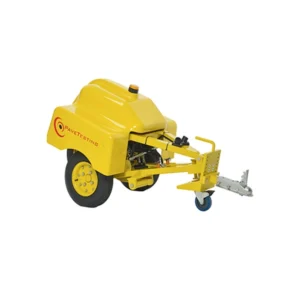
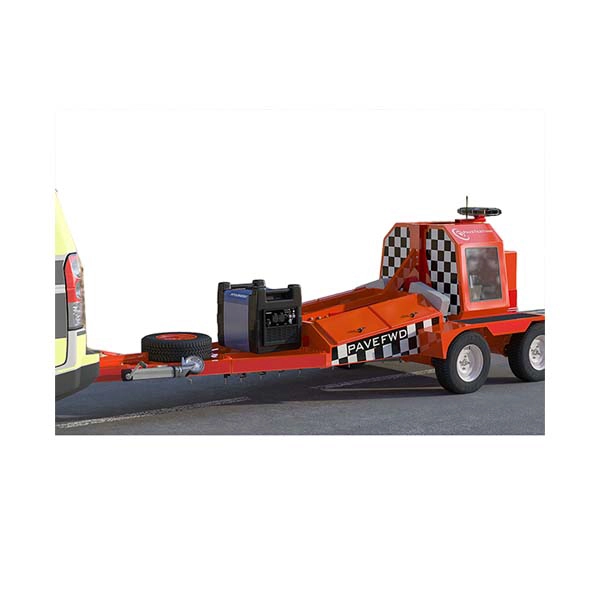
A Falling Weight Deflectometer (FWD) is a standard field instrument for assessing pavement structural condition and bearing capacity. The device simulates a wheel load by applying an impulse load to the pavement surface and then measuring the resulting vertical deflection. Based on the relationship between the applied load and measured deflections, key structural parameters can be evaluated to support decisions on maintenance, rehabilitation, and overlay design.
The system relies on precise load measurement and a set of deflection sensors that capture the pavement response. Measurements are recorded and used for analyses such as stiffness estimation, evaluation of pavement layer condition, and identification of anomalies that may indicate weakness in the base/subgrade or within the pavement structure. Thanks to its repeatability and speed, an FWD is a core tool in modern Pavement Management Systems and in projects requiring objective performance verification.
PaveTesting offers multiple configurations—from lightweight handheld deflectometers for flexible, rapid checks to super-heavy trailer-mounted FWD systems for demanding sections, higher load levels, and intensive survey campaigns. Each system can be tailored to the user’s specific requirements, depending on pavement type, expected load levels, test methodology, and field workflow.
FWD testing supports a wide range of applications related to pavement design, maintenance, and quality assurance. It is particularly valuable for rehabilitation and overlay planning, evaluation of PCC pavement joint sealing, assessment of load transfer efficiency, and void detection. It is also used for project acceptance and evaluation, testing of experimental paving materials, and assessing the impact of utility cuts.
All equipment meets and exceeds the specifications set by ASTM and AASHTO standards, ensuring compatibility with commonly required test procedures and the expectations of road authorities, owners, and testing laboratories.
Typical applications:
-
pavement rehabilitation and overlay design
-
evaluation of PCC joint sealing
-
Pavement Management Systems (PMS)
-
load transfer efficiency
-
void detection
-
spring load limitations
-
experimental paving materials
-
project acceptance and evaluation
-
utility cuts