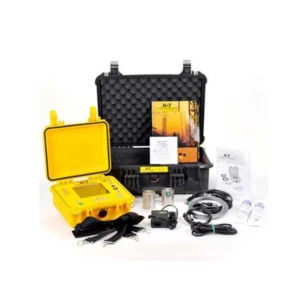
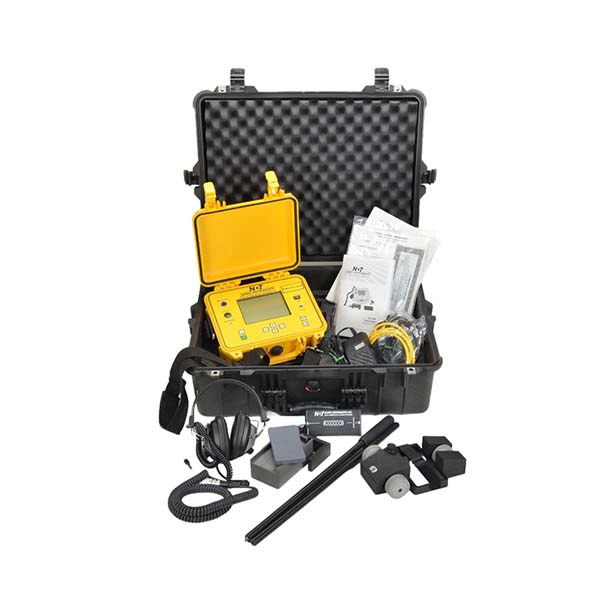
James Rebarscope® is a professional rebar locator that combines the simplicity of classic locators with the advantages of digital signal processing. It is intended for experts who need to quickly and reliably determine the position of reinforcement and other metal elements in concrete – without unnecessary “guessing” and with clear, repeatable results.
At the heart of the system is an eddy current sensor that provides high accuracy in detection, and additional built-in temperature compensation eliminates the need for manual “zeroing” of the sensor. This means that the device prepares for work faster and works more stably when field conditions change. A special practical advantage is that one sensor covers all depth ranges, so there is no replacement of probes depending on the situation, which further speeds up and simplifies the inspection.
Rebarscope® is designed for realistic construction site conditions and supervision. The robust, splash-resistant housing protects the device from moisture and dust, while the daylight-visible screen is suitable for outdoor use. Additionally, the separate sensor and main instrument unit facilitate scanning in confined or hard-to-reach areas (eg along the edges of elements, in niches or near installations).
In addition to the classic location of reinforcement, the device also detects other elements in concrete, including post-tensioning cables, pipes and copper installations, as well as non-ferrous metals such as copper and aluminum and certain types of stainless steel and wire. This makes it particularly useful for mapping utility lines and reducing the risk of damage to installations during drilling, cutting or subsequent construction operations.
For more advanced applications, an optional scanning cart is available that records information about the distance and position of the rebar, which can be very useful when systematically mapping larger areas and creating documentation of the rebar condition.
In terms of performance, the Rebarscope® locates up to a depth of 200 mm and determines rebar size up to a depth of 115 mm, which covers a large number of standard tasks in construction practice. The device is compliant with relevant standards and guidelines, including ACI 318, BS 1881 Part 204, DIN 1045, CP 110, EC2, SIA 162 and DGZfP B2, facilitating its application in projects where testing and documentation standards need to be met.
Typical applications:
- civil engineers and supervision
- rebar mapping and rebar mesh analysis
- checking positions before drilling/anchoring
- mapping of installations and utility lines in concrete